How to look at Daum Nancy glass before you buy
Study Daum Nancy Art Deco glass through shape, technique, marks and condition. Use museum comparisons and a checklist before choosing a French glass piece.
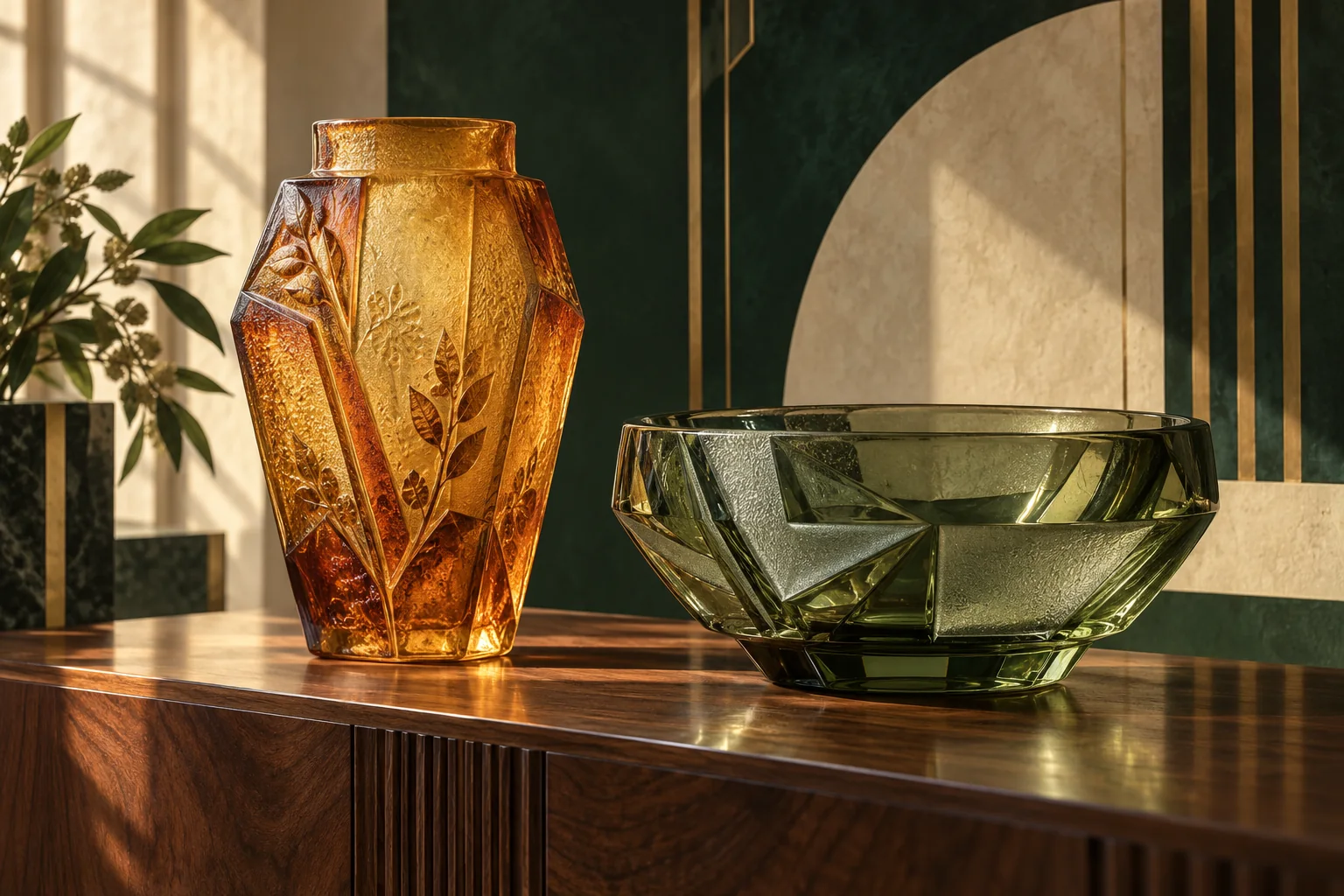
Daum Nancy Art Deco glass is best studied as a whole object. Look at its form, color, surface and construction before concentrating on the signature. The Nancy glassworks produced work across several artistic periods, so the name Daum does not by itself mean Art Deco. A useful purchase file combines photographs, dimensions, condition notes and a documented comparison. This guide explains what changed in Daum's design vocabulary, how to read a mark without overinterpreting it, and which details to request when buying a piece from a distance.
Start with the practical guide ↓
What distinguishes Daum Art Deco from Art Nouveau?
The distinction starts with the design, but it must be checked against the object record. Naturalistic decoration and geometric organization are useful things to describe; neither is an automatic date stamp. An interwar maker could continue producing earlier styles while developing new ones.
The Musée de l'École de Nancy explicitly notes that Daum's Art Nouveau production continued after the First World War alongside Art Deco work. Its account connects the new aesthetic with Paul Daum, geometric forms and new colors. Daum's own history similarly places the emergence of its Art Deco designs around 1920.
When comparing two vessels, describe how decoration relates to the outline. Does it follow a plant's growth, divide the surface into repeated fields, or emphasize the weight and volume of the glass? Compare the rim, foot and profile as well as the motif. A photograph of a signature cannot answer those design questions.
The Musée des Beaux-Arts de Nancy collection is useful because it covers a long production history. It prevents the common mistake of treating every signed Daum object as part of one period. Choose a dated comparison with similar material and technique, not simply another attractive vase carrying the same name.
What can a Daum Nancy mark actually tell you?
A mark is evidence to record, not a verdict. Photograph it in focus and in relation to the base. Include an overall view, a straight view of the inscription and an oblique view that makes the surface easier to read. Preserve uncertain letters in your notes rather than completing them from memory.
A museum record for a Daum goblet dated around 1925 records a base signature reading Daum, the Cross of Lorraine, Nancy and France. That is a documented mark on one specific object. It does not mean every genuine piece must carry exactly that wording, or that a similar inscription authenticates another vessel.
The Nancy goblet record also gives the technique and dimensions: blown glass, bubbled and enamel-painted, 6.4 cm high and 9 cm in diameter. Those details make a stronger comparison than the signature alone.
Ask whether the inscription is consistent with the proposed model and manufacturing technique. Surface wear, polish and later alterations can complicate interpretation. If attribution is important to the purchase, obtain a written description explaining the basis of that attribution and seek an appropriate glass specialist's opinion.
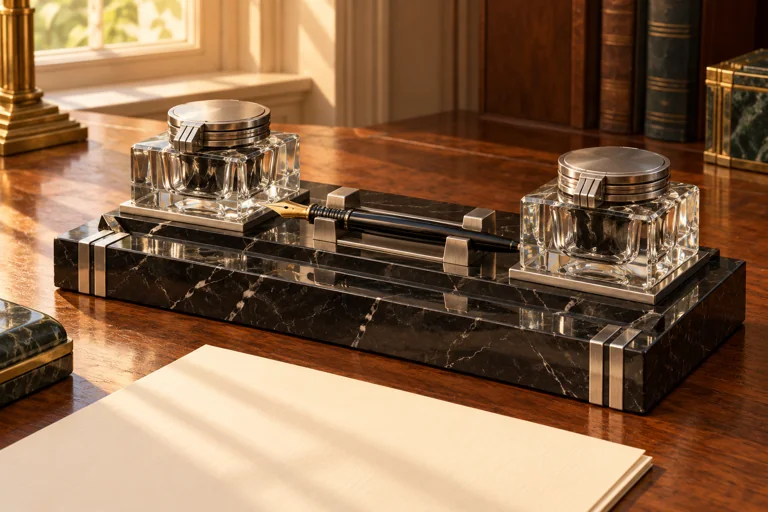
A similar approach is needed for a glass inkwell with a metal lid. The maker of the glass, the maker of the mount and the date of their assembly are separate questions.
Which glass techniques and condition details should you compare?
Use the technique stated in a reliable record, rather than assuming that all Daum glass is pâte de verre. The maker's output includes different materials and methods across its history. A mottled surface, thick wall or molded form does not on its own establish the manufacturing process.
| Area | Record | Question for the seller |
|---|---|---|
| Rim | Profile, chips, unevenness and finish | Has the rim been ground or repaired? |
| Body | Texture, decoration and visible cracks | Are any lines damage rather than decoration? |
| Base | Mark, wear, finish and dimensions | Can you supply an unedited close-up? |
| Color and transparency | Appearance in neutral and transmitted light | Do photographs accurately represent the color? |
| Attachments | Mounts, lids and contact points | Which parts are documented as original? |
Ask for condition wording that identifies a location. “Small chip at the rear rim” is useful; “good for its age” is difficult to evaluate. A close-up should be accompanied by a wider photograph so you know where the detail lies. Reflections can conceal damage, so a second lighting angle is often more informative than a higher-contrast image.
Do not transfer the condition of an old sale listing to another piece. The earlier search excerpt about a transparent molded Daum inkwell mentioned two chips. Without that specific object and its photographs, those are historical listing details, not a description of current inventory.
How should you plan display and handling?
Measure the space before choosing the vessel. Record maximum height, maximum width and the size of the base. Include a separate cover or projecting mount. For an existing collection, a simple paper footprint can show whether a wide bowl will crowd adjacent objects.
Choose a stable position where the object can be lifted without striking a shelf or neighboring piece. Lift by the body with adequate support, rather than by a lid, handle or decorative mount whose security is uncertain. Avoid stacking pieces merely because their outlines appear to nest.
For cleaning, the presence of paint, applied decoration, metal mounts or old repairs changes the decision. Do not assume a robust-looking glass vessel can be soaked or polished. Ask for material-specific conservation advice when the finish or condition is uncertain. Keep the condition record and photographs taken before any treatment.
To compare collecting questions across materials, read the guide to Lustucru-associated ceramic shakers. A glass signature and a ceramic brand motif each need context; neither replaces examination of the complete object.
What should an overseas buyer request before committing?
Request four things together: a written attribution, a measured description, a condition report and delivery terms. A named maker without evidence is incomplete; an excellent attribution without a clear damage report is incomplete too. Confirm which photographs show the actual piece being offered.
For glassware vocabulary and related collecting questions, explore Lo-Cantou's vintage glassware guide. Its table-glass collection is not evidence of current Daum stock. For a specific request, ask the atelier about the type of French glass you are researching, attaching measurements and photographs where available.
The broader design connection is visible in the Chrysler Airflow's streamlined silhouette. Glass and automobiles can express modernity through very different materials. Compare the visual choices while keeping the history of each object separate.
Keep a copy of the final description and agreed terms. An object can be appealing without a prestigious attribution; what matters is that the description, evidence and purchase price are evaluated on the same basis.
Questions and answers
Is all Daum Nancy glass Art Deco?
No. Daum’s production spans several periods, and the Nancy museum describes Art Nouveau work continuing alongside Art Deco after the First World War. The name alone does not date a piece. Compare its form, technique and decoration with a documented object from the relevant period before classifying it.
Does a Cross of Lorraine prove that a piece is genuine?
A Cross of Lorraine forms part of documented Daum signatures, including the Nancy museum goblet cited here. It is not sufficient by itself to authenticate another object. Examine the complete inscription, construction, technique, condition and provenance, then compare those features with a reliable model record.
Are molded glass and pâte de verre the same thing?
The terms should not be used as interchangeable labels. A molded appearance describes a shape or production clue, while pâte de verre names a particular glassmaking approach. Daum used different techniques over time. Use the process documented for the specific model, and retain uncertainty when that evidence is missing.
What photographs should I request for a Daum glass purchase?
Ask for the complete object from several sides, the base and signature, the rim, any cover or mount, and close-ups of each reported defect. Include a scale or measurements in the written record. Neutral-light photographs help assess color, while an additional angle can reveal reflections hiding chips or cracks.